 Blaine Roofing
 Board & Batten Siding in Birch Point: A Look That Fits the Setting
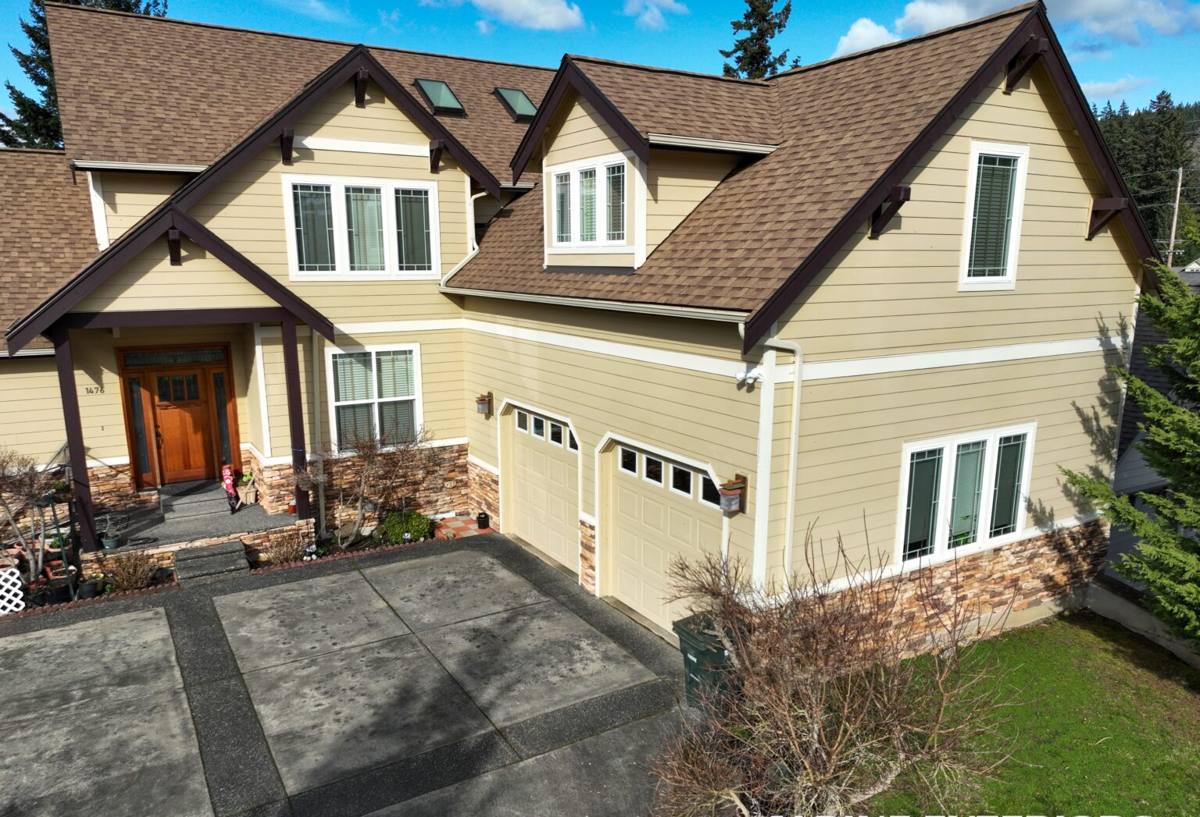
Board and batten has become one of the most requested siding profiles for homes along the water in Blaine, and Birch Point is no exception. The vertical lines read as clean and modern on newer builds, but they also suit the older cabins and cottage-style homes scattered through this part of Whatcom County. It works as a full-house siding, as an accent on gables and dormers, or as a way to break up a long, flat elevation facing the water.
What makes board and batten a good fit for Birch Point specifically isn't just the look. It's a profile that, done correctly, sheds wind-driven rain well and gives you fewer horizontal ledges for salt spray, moss spores, and debris to sit on compared to some other siding styles. Done incorrectly, though, it's one of the least forgiving profiles out there — every batten and every seam is a potential path for water if the layers behind it aren't right. That's the part homeowners rarely see until years later.
The Climate Factors That Actually Matter Here
Salt Air
Birch Point sits close enough to the water that salt-laden air is a constant, not an occasional event. Salt air accelerates corrosion on fasteners, staples, and any exposed metal flashing, and it breaks down cheap paint films faster than inland exposure would. Siding materials and hardware that aren't rated for this kind of exposure fail earlier here than the manufacturer's general warranty language would suggest.
Driving Rain
Storms coming off the water don't just fall — they're pushed sideways into the wall assembly. Board and batten has more vertical seams per square foot than wide-plank lap siding, and each one is a place wind-driven rain can try to work its way behind the cladding. The siding itself is only the first line of defense; what's behind it matters just as much.
Moss Season
Whatcom County's wet season runs long, and shaded, north-facing walls near mature trees or close to the water hold moisture for extended stretches. Moss and mildew don't just look bad — sustained dampness against a wall surface is exactly the condition that causes paint failure, substrate softening, and rot in materials that aren't built to handle it.
What a Correct Board & Batten Installation Requires
Board and batten is unforgiving because it's usually installed with a batten strip covering every seam between panels, which means every one of those battens is a fastening point and a potential water path. A correct installation in a climate like this one comes down to a handful of non-negotiables:
- A drainage gap (rainscreen) behind the panel so any moisture that does get past the cladding can drain and dry instead of sitting against the wall sheathing
- A continuous, properly lapped weather-resistive barrier underneath, with all penetrations and transitions flashed before the first panel goes up
- Corrosion-resistant fasteners suited to salt air exposure, driven at the correct spacing and depth — not just close enough
- Batten spacing and fastening that follows the manufacturer's engineering, not just what looks even from the ground
- Factory-finished panels wherever possible, so the protective coating isn't dependent on field painting conditions
Skip any one of these and the siding can still look right for a few years. In Birch Point's climate, the gap between "looks fine" and "is actually protecting the wall" tends to show up faster than in drier parts of the state.
Why We Install Only James Hardie for This Application
We don't install vinyl, LP SmartSide, primed spruce, cedar, or other fiber cement brands for board and batten work, and we're upfront about why. James Hardie fiber cement is non-combustible, dimensionally stable in wet-dry cycling, and available in HZ5 formulations engineered specifically for Pacific Northwest moisture exposure rather than a generic national spec. For a profile with as many seams as board and batten, that stability matters — it's less prone to the swelling, cupping, or seam movement that shows up over time with wood-based or vinyl alternatives in a marine climate.
The factory-applied ColorPlus finish is baked on under controlled conditions and holds color and resists moss and mildew growth better than field-applied paint, which matters a great deal on the shaded, damp-prone walls common near the water. It also comes with a meaningful, transferable warranty — something that matters to homeowners in Birch Point who may sell in the future and want documentation that the siding was installed to a real standard, not just painted and hoped for.
We've made the call that we'd rather install one product system correctly, to spec, every time, than offer a menu of materials with different failure modes we'd have to explain to a homeowner five years down the road.
Our Process for a Birch Point Board & Batten Project
Every project starts with a walk of the exterior, not a quote from photos. We're looking at wall orientation relative to prevailing wind and water exposure, existing moisture damage, sheathing condition, and how the home's trim and window details will interact with a vertical batten pattern.
From there, existing siding comes off and we inspect what's underneath — sheathing, framing, and existing weather barrier — before anything new goes up. Any soft or water-damaged sheathing gets addressed before siding, not covered over. We install a new weather-resistive barrier and rainscreen gap, flash every window, door, and penetration first, then install the James Hardie panels and battens to the manufacturer's fastening and spacing specifications for this exposure zone. We finish with a walk-through so you understand what was done and why, not just a final invoice.
Working Birch Point regularly means we already know which walls in this area tend to take the worst of the weather and where extra attention to flashing and drainage pays off — that's the kind of thing a crew unfamiliar with this stretch of coastline has to learn the hard way, usually at your expense.
What Drives the Cost of a Board & Batten Project
| Factor | Why It Matters |
|---|---|
| Square footage & wall height | More area and taller walls mean more material, more battens, and more labor and staging time |
| Full-house vs. accent application | Gable or dormer accents cost less overall but require the same careful detailing at every transition |
| Existing wall condition | Rot, soft sheathing, or a failed weather barrier found during tear-off adds repair work before siding can go on |
| Trim & corner complexity | Water tables, corner boards, and window trim details add labor, especially on older or custom homes |
| Batten spacing & width | Narrower, tighter batten spacing looks striking but means more fasteners, more seams, and more labor hours |
| Access & staging | Waterfront lots, slopes, and limited driveway access near the shoreline can add setup time and equipment needs |
Any honest estimate for board and batten work should walk through these factors specifically, not just quote a flat per-square-foot number pulled from a general siding job.
Maintenance and What to Expect Over Time in This Environment
James Hardie board and batten siding, installed correctly, is low-maintenance compared to wood or vinyl alternatives — but "low-maintenance" doesn't mean "no attention needed" this close to the water. A periodic rinse to clear salt residue and organic buildup, especially on shaded or north-facing walls, goes a long way toward keeping the ColorPlus finish looking the way it should through moss season. Caulking at trim and penetration points should be checked periodically, since caulk is a maintenance item on any siding system regardless of the cladding material behind it.
What you shouldn't have to deal with, if the installation was done right, is paint peeling off the battens, water staining at the base of the wall, or soft spots developing at seams. If you're seeing any of that on an existing board and batten installation, it's usually a sign of a detail that was missed during the original install rather than a limitation of the product itself.
What to Look for When Hiring for This Job
- Ask specifically how they handle the rainscreen gap and weather barrier behind board and batten — not just what siding brand they install
- Confirm they use fasteners rated for coastal/salt air exposure, not standard interior-grade fasteners
- Ask whether they follow the manufacturer's published fastening and batten-spacing specs, and whether they can show you that documentation
- Check that flashing details around windows, doors, and roof lines are part of the written scope, not an assumption
- Ask how they handle sheathing or framing repairs if they're found once old siding comes off
- Look for local experience — a crew that's worked walls exposed to this stretch of coastline will know where problems tend to start
A contractor who can't answer these questions in detail is guessing at a profile that doesn't leave much room for guessing.
Ready to Talk About Your Home
If you're considering board and batten siding for a home in Birch Point, we're happy to take a look, walk the exterior with you, and explain exactly what a correct installation would involve for your specific walls and exposure. There's no cost and no pressure to move forward — just a straight assessment from a crew that already works this part of Blaine. Use the form below to request a free estimate.