 Blaine Roofing
 Windows on the Peace Arch Border Take a Different Kind of Beating
Homes near the Peace Arch, on the western edge of Blaine, sit close enough to Semiahmoo Bay and Drayton Harbor that salt-laden air is part of daily life. Add Whatcom County's long wet season, sideways rain off the Strait of Georgia, and months of low sun angle that keep north- and west-facing walls damp, and you have conditions that are genuinely harder on windows than most manufacturers' warranty language assumes. This isn't a page about windows in general. It's about what actually holds up on this stretch of border, what fails first, and how we handle the replacement so it doesn't have to be redone in eight years.
We're a Blaine-based crew and Peace Arch is inside our regular service loop, not a special trip. That matters more than it sounds like it should, and we'll explain why further down.
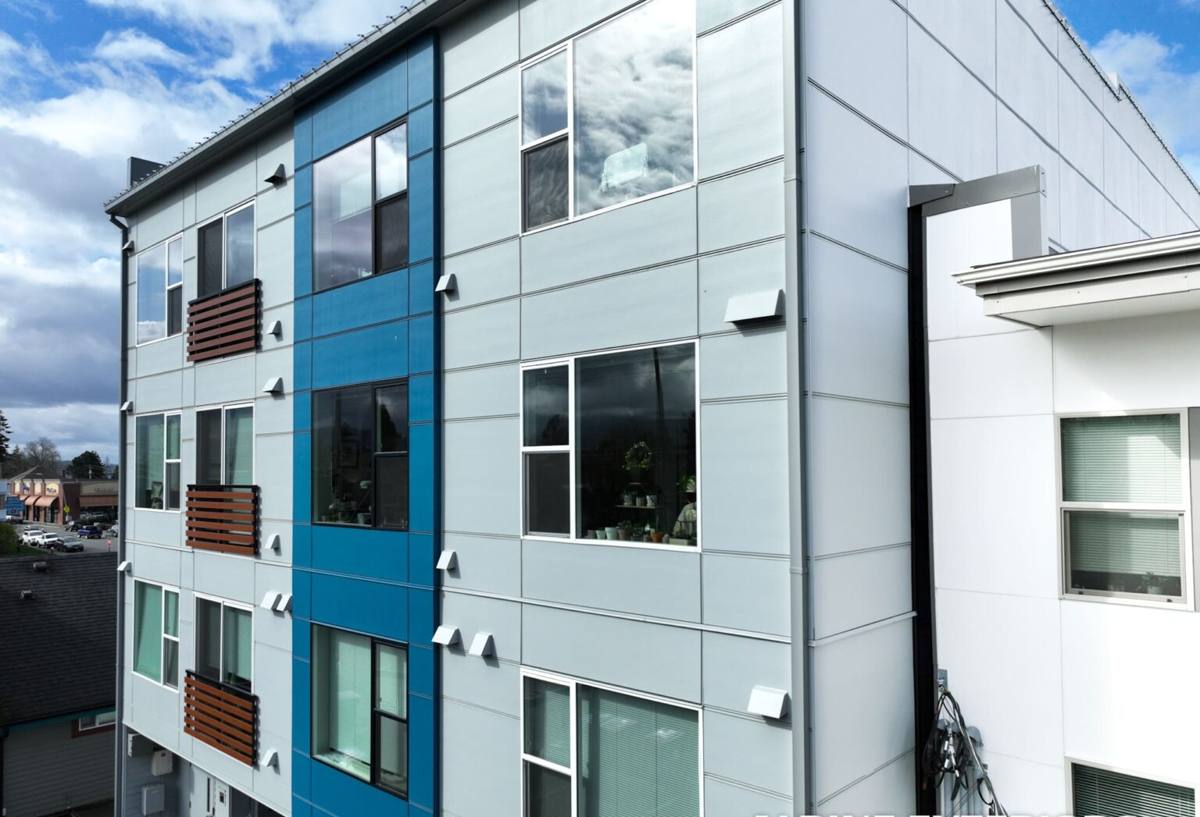
What Salt Air and Driving Rain Actually Do to a Window
It's worth being specific, because "coastal exposure" gets thrown around as a vague warning without anyone explaining the mechanism.
Corrosion of hardware and frame components
Salt-bearing moisture accelerates corrosion on window hardware — locks, hinges, balance mechanisms, and screws — well before the glass or frame shows visible wear. Aluminum-clad and vinyl frames resist this better than bare wood or lower-grade metal hardware, but the fasteners and internal components still matter. A window can look fine from the curb while its lock mechanism is seizing up inside.
Wind-driven rain finds the gaps
Ordinary rain falls straight down and sheds off a properly capped window with little drama. Driving rain off the Strait pushes water sideways and upward, testing every seam, sash gap, and flashing detail a window has. A window that's watertight in a still-air test can still leak under wind-driven conditions if the flashing and sill pan weren't done correctly at install.
Moss season and moisture retention
Blaine's moss season isn't just a roof problem. Moss and algae growth on siding around window openings holds moisture against the wall assembly for weeks at a time, which is exactly the environment that lets water find its way behind trim and into the rough opening if the original flashing was minimal or improperly lapped.
Condensation from temperature swings
Cool, humid coastal air combined with heated interiors during our wet months is a recipe for interior condensation on older or poorly sealed windows. Persistent condensation on glass or, worse, inside the frame cavity, is one of the clearest signs a window's seal or insulating performance has failed.
Signs a Peace Arch Home's Windows Need Replacing, Not Patching
- Fogging or a visible haze between panes of double- or triple-glazed units — the seal has failed and the gas fill is gone
- Soft or discolored wood trim at the sill or jamb, especially on west- and south-facing walls that catch the worst of the driving rain
- Windows that are difficult to open, close, or lock — often a sign of frame swelling, corroded hardware, or a warped sash
- Persistent condensation on the inside of the glass during cool months, even with reasonable ventilation
- A noticeable draft or cold spot near the window edge when it's windy outside
- Visible daylight or a gap where the sash meets the frame
- Peeling paint, bubbling, or musty smell in the wall or trim immediately around the window — a sign moisture has already gotten past the surface
Any one of these on its own might be manageable with repair or re-caulking. Two or more on the same window, especially on a wall that takes direct weather, is usually the point where replacement is the more honest recommendation than another round of patching.
What a Correct Window Replacement Involves Here
The window unit itself is maybe half the job. The other half — the part that determines whether it's still watertight in ten years — is how it's flashed and sealed into the wall.
Sill pan flashing
Every replacement we do gets a proper sill pan at the rough opening, sloped to shed any water that gets past the window itself out and away from the wall framing. This is the single most important detail for a coastal, wind-driven-rain climate, and it's also the detail most often skipped or done poorly in older installs and in some quick "insert" replacement jobs.
Correct flashing sequence
Housewrap and flashing tape need to be lapped in the right order — sill, then jambs, then head flashing over the top — so water is always directed outward and down, never trapped behind a layer. Get this sequence backwards and you can create a hidden leak path that won't show up as a visible drip for years.
Sealant and backer rod, not just caulk
Exterior joints get backer rod and a proper sealant bead sized for the gap, not a thin skim of caulk over a wide gap that will crack and separate within a season or two of temperature swings.
Insulation and air sealing at the rough opening
The gap between the window frame and the rough opening gets filled with low-expansion foam or fiberglass insulation — not left open, and not over-packed with high-expansion foam that can bow the frame and affect operation.
Interior and exterior trim reset
Trim comes off carefully, gets reused where it's sound, and gets replaced where it's already showing rot or damage rather than reinstalled over a problem that will just resurface.
Choosing the Right Frame Material for This Exposure
There's no single "best" window material for every home — it depends on the wall's exposure, the home's style, and budget. Here's how the common options actually perform under Blaine's salt air and rain, in plain terms.
| Frame Material | Coastal Performance | Maintenance | Typical Trade-Off |
|---|---|---|---|
| Vinyl | Good corrosion resistance; won't rust or rot | Low — occasional cleaning | Fewer color/finish options; can flex slightly on very large units |
| Fiberglass | Very good — dimensionally stable, resists salt and moisture well | Low | Higher upfront cost than vinyl |
| Aluminum-clad wood | Good exterior protection with warm wood interior look | Moderate — exterior is low-maintenance, interior wood still needs care | Higher cost; any clad seam failure exposes wood beneath |
| Bare wood | Poor without diligent upkeep — most vulnerable to moisture and salt over time | High — regular painting/sealing required | Best traditional look, but demands ongoing maintenance in this climate |
Our general standard for direct-exposure walls near the water is vinyl or fiberglass, or aluminum-clad if the home's design calls for a wood interior look. We'll walk through what's already on the house and what makes sense for each wall before recommending anything — a shaded, protected wall doesn't need the same spec as one that takes the full brunt of a southwester off the Strait.
Glass and Glazing Choices Worth Understanding
Beyond the frame, the glazing package affects both comfort and how the window handles our climate.
Double vs. triple pane
Double-pane, low-E glass is the standard for most Whatcom County homes and performs well. Triple-pane adds meaningful sound dampening and a slightly warmer interior surface in winter, which some homeowners near busy roads or with rooms that run cold appreciate — but it adds weight and cost, and isn't always necessary on every elevation of a home.
Low-E coatings
Low-emissivity coatings help control heat transfer year-round and are standard on nearly every quality window sold today. The coating type can be tuned slightly for more solar gain (helpful on shaded north walls) or less (helpful on unshaded south and west walls that already get plenty of sun and heat in summer).
Argon or krypton gas fill
Gas-filled sealed units improve insulating performance over plain air-filled units. It's a detail baked into the unit at manufacture, not something installed on site, but it's worth knowing it's there and why a failed seal (visible fogging) means that performance is gone, not just cosmetic.
Why a Crew That Already Works Peace Arch Matters
Window replacement quality comes down to installation detail far more than brand name, and installation detail comes down to experience with the specific conditions a wall faces. A crew that regularly works this part of Blaine has already seen how wind off the water hits certain orientations, how moss and moisture build up on specific wall types in this neighborhood, and which flashing details actually hold up through a full wet season here versus on paper. That's not something a general contractor pulling from a different climate zone picks up on the first job.
Being local also means straightforward things: we can get back out quickly if something needs a look after the first hard storm, we're not marking up a trip charge into the estimate, and we're accountable to the same community we're working in.
What to Expect From Our Process
- On-site assessment of each window's current condition, frame material, and exposure — not a one-size estimate over the phone
- Straightforward recommendation on repair versus replacement, window by window, with the reasoning explained
- A written estimate covering unit cost, flashing and installation detail, trim work, and disposal of old units
- Scheduling that accounts for weather — we don't open up a wall assembly during a stretch of driving rain if it can be avoided
- Installation with proper sill pan flashing, correct wrap sequencing, and sealed, insulated rough openings on every unit
- A final walkthrough so you can see and test each window before we consider the job done
Cost Factors Worth Knowing Before You Get Quotes
Window replacement pricing varies widely based on a handful of factors, and understanding them helps you compare quotes on an apples-to-apples basis rather than just by bottom-line number.
| Factor | Why It Moves the Price |
|---|---|
| Frame material | Vinyl is typically the most affordable; fiberglass and clad-wood cost more upfront |
| Full-frame vs. insert replacement | Full-frame replaces down to the rough opening and allows proper new flashing; inserts are faster but rely on the existing frame's condition |
| Number and size of openings | Larger units and multi-window walls take more labor and material |
| Existing damage found at removal | Rot or moisture damage discovered once trim comes off adds repair scope beyond the window itself |
| Glazing package | Triple-pane, upgraded Low-E coatings, or specialty glass add cost over standard double-pane |
| Access and height | Second-story or hard-to-access windows take more setup time and equipment |
Most single-family homes doing a partial or full window replacement in this area land in a broad mid-to-upper-thousands range for a handful of windows, up in the tens of thousands for a whole-house project — but the honest answer is that it depends heavily on the factors above, and we'd rather give you a real number after seeing the windows than a rough figure that doesn't hold up once we're on site.
Our Standard for What We Won't Cut Corners On
There are a few things we hold as a baseline on every job, regardless of budget, because skipping them is what causes callbacks two or three years down the road: proper sill pan flashing on every unit, correct flashing lap sequence, backer rod and sized sealant joints rather than a thin caulk skim, and low-expansion foam or fiberglass fill at the rough opening rather than leaving gaps or over-packing. None of that shows on the finished window, which is exactly why it's worth asking any contractor you're getting quotes from whether they include it.
If your windows in the Peace Arch area are fogging, drafting, sticking, or just due for an honest look, we're happy to come out and take a look at no cost and no pressure. Use the form below to request a free estimate and we'll get back to you to set up a time.