 Blaine Roofing
 Roofing in the Sumas Area: A Different Set of Demands
Homes around Sumas sit in a stretch of Whatcom County that takes weather seriously. You're close enough to the Strait of Georgia and Boundary Bay to catch salt-laden air on a regular basis, far enough into the county's low, tree-shaded valleys to get long stretches of shade and standing moisture, and squarely inside the storm track that brings driving, wind-blown rain off the water for much of the year. Add a moss season that can run eight months or more in shaded, north-facing sections of a roof, and you have a climate that is genuinely harder on shingles, flashing, and fasteners than most manufacturers assume when they write their warranty fine print.
A roof replacement here isn't just about swapping old shingles for new ones. It's about building a roof system that's matched to how water, wind, and organic growth actually behave on this piece of the map. That's the lens we bring to every Sumas-area replacement — not a generic install, but one built for the conditions right outside your door.
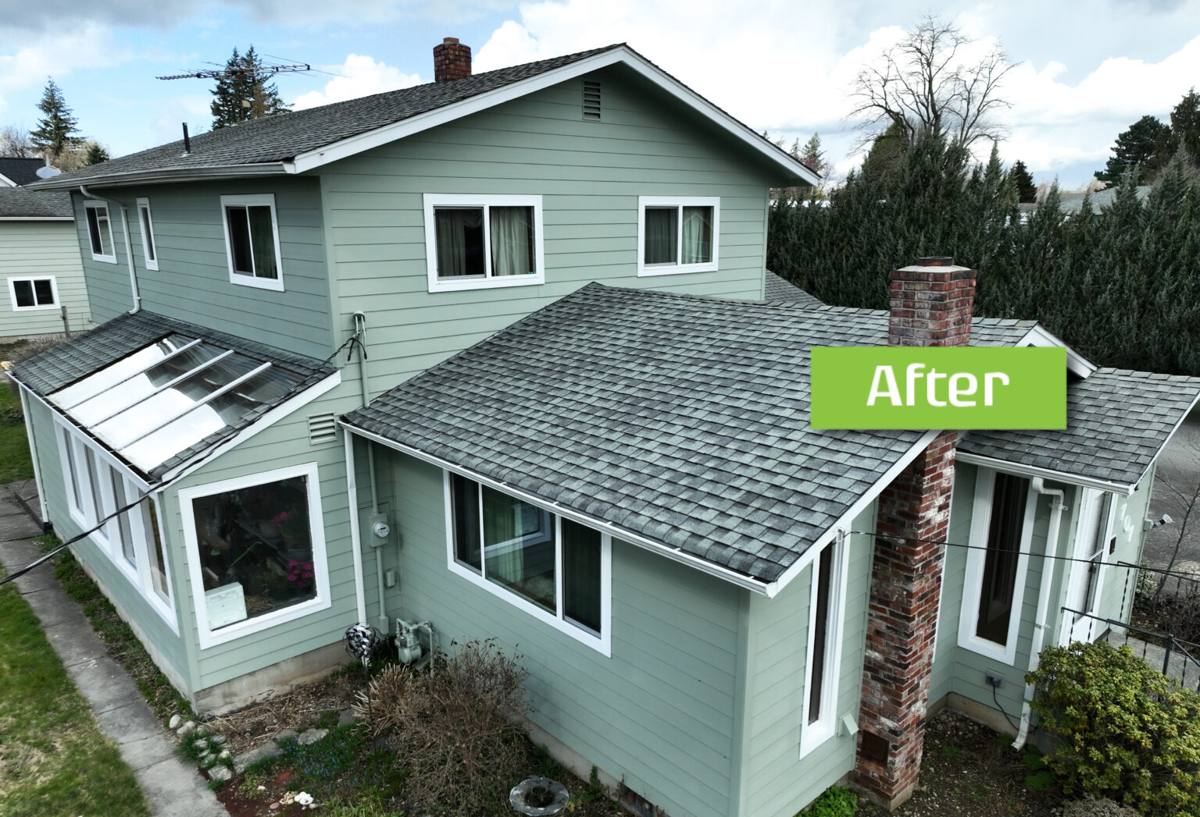
Why Roofs in This Part of Whatcom County Age Faster
Salt Air and Metal Fatigue
Even homes set back from the water pick up salt-bearing moisture carried on prevailing winds. Over years, that salt air accelerates corrosion on exposed fasteners, flashing seams, and any galvanized metal that isn't properly coated or protected. It's slow and easy to ignore — until a flashing joint starts leaking from the inside out.
Driving Rain and Wind-Driven Water
Rain that falls straight down is forgiving. Rain that's pushed sideways by wind off the water is not — it finds every gap in a roof's water-shedding layers, working its way under shingle tabs, around vent boots, and up under poorly lapped underlayment. Roofs built for calmer climates often skip details that matter enormously here.
Moss, Shade, and Organic Growth
Wherever tree cover keeps a roof slope in shade for a large part of the day, moss and algae get a long runway to establish themselves. Moss doesn't just look bad — its root structure lifts shingle edges, holds moisture against the roof deck, and shortens the life of the material underneath it, sometimes by years.
Signs a Sumas-Area Roof Needs Replacement, Not Repair
- Granule loss heavy enough that shingles look patchy, blotchy, or bare in spots
- Multiple layers of moss or algae that keep returning within a season of cleaning
- Shingles that are cupping, curling, or cracking, especially on south- and west-facing slopes
- Soft spots or visible sagging when you walk the attic or view the roofline from the ground
- Staining on interior ceilings or attic sheathing, which usually means water has already gotten past the roofing layer
- A roof already past 20-25 years old for asphalt shingle, regardless of how it looks from the curb
A patch can buy time on one or two of these. When several show up together, repair costs start to rival replacement — and you're paying twice.
What a Correct Roof Replacement Actually Involves
A roof replacement done right is a system, not a single product. Skipping or shortcutting any one layer undermines everything above it.
Full Tear-Off
We remove the existing roofing down to bare decking rather than layering over old material. Layering hides deck damage, adds weight, and voids most manufacturer warranties outright.
Deck Inspection and Repair
With the old roofing gone, we can actually see the plywood or OSB decking underneath. Any soft, delaminated, or water-damaged sections get replaced before anything new goes down — this is the step that gets skipped most often on cut-rate jobs, and it's the one that causes the worst callbacks.
Underlayment Built for Wind-Driven Rain
Given how often rain here arrives sideways, we pay close attention to underlayment coverage and lap direction, with self-adhered ice-and-water membrane at eaves, valleys, and any low-slope transitions where wind-driven water is most likely to find a way in.
Flashing at Every Penetration
Chimneys, skylights, plumbing vents, and wall-to-roof transitions are where the majority of leaks actually start — not in the open field of shingles. New, properly lapped flashing at every one of these points is non-negotiable.
Balanced Ventilation
Intake at the eaves and exhaust at the ridge, sized to move air through the attic evenly. Ventilation is what keeps moisture from condensing on the underside of the deck during our cool, damp months — and it's a major factor in how long moss takes to re-establish.
Material Options for This Climate
| Material | Typical Lifespan Here | Moss/Moisture Resistance | Maintenance |
|---|---|---|---|
| Standard 3-tab asphalt | 15-20 years | Low — needs regular cleaning | Moderate to high |
| Architectural (laminate) asphalt | 25-30 years | Moderate; better with algae-resistant granules | Moderate |
| Metal (standing seam or panel) | 40-50+ years | High — sheds moss and moisture well | Low |
| Cedar shake | 20-30 years with upkeep | Low without diligent maintenance | High |
We install and stand behind all of these, but we'll tell you plainly where each one struggles in a shaded, damp, salt-influenced setting like Sumas. Cedar shake, for example, looks excellent and is a legitimate choice, but it demands consistent moss and moisture management to reach its full lifespan — that's a maintenance commitment worth going in with eyes open, not a defect in the product itself. Architectural asphalt with algae-resistant granules is the most common balance of cost, appearance, and low maintenance we install in this area.
What Drives Cost on a Sumas Roof Replacement
| Factor | Why It Matters |
|---|---|
| Roof size and number of slopes | More square footage and cut lines mean more material and labor |
| Deck condition | Rot or delamination found at tear-off adds repair cost before new roofing goes on |
| Pitch and access | Steep or hard-to-reach roofs take longer and require more safety setup |
| Number of penetrations | Every chimney, skylight, and vent needs its own flashing detail |
| Material chosen | Asphalt, metal, and cedar carry different material and labor costs |
| Tear-off layers | Removing two or three old layers costs more than removing one |
We won't quote a number without seeing the roof — anyone who does is guessing. What we can promise is a written estimate that breaks these factors out clearly, so you know exactly what you're paying for.
How Our Process Works
- On-site inspection. We walk the roof and attic, check for deck damage, ventilation problems, and moss/moisture patterns specific to your property's sun and shade exposure.
- Written estimate. A clear breakdown of material, labor, and any deck repair contingencies, with no pressure to decide on the spot.
- Scheduling around the weather. Given how much rain this area gets, we plan tear-off days around forecast windows and keep the roof protected if conditions turn.
- Tear-off and deck repair. Full removal of old material, inspection, and replacement of any compromised decking.
- Underlayment, flashing, and ventilation installed to spec. Every detail described above, not just the visible shingle layer.
- Final walkthrough. We review the finished roof with you, including gutter and downspout function, before calling the job complete.
- Cleanup. Magnetic nail sweep and full site cleanup — your yard should look like we were never there, aside from the new roof.
Moss Prevention Doesn't End at Installation
Given how long moss season runs in shaded parts of Whatcom County, we design new roofs with moss management built in — proper ventilation, algae-resistant materials where appropriate, and clean water-shedding paths that don't give moss anywhere easy to take hold. We're also glad to walk homeowners through simple, low-cost habits — periodic gentle cleaning, keeping overhanging branches trimmed back — that extend the life of the new roof well past what installation alone can guarantee.
A Simple Pre-Replacement Checklist for Homeowners
- Move vehicles away from the driveway and any area near the house for the workday
- Clear the attic of stored items near the roofline, if accessible
- Take down wall art or shelving in top-floor rooms, since nailing can cause minor vibration
- Note any known leak locations or trouble spots to point out during the walkthrough
- Plan for pets to be indoors or away from the work area during tear-off
Why a Crew That Already Works Sumas Matters
A roofing crew that regularly works this part of Whatcom County already knows which details matter here — how far up a slope ice-and-water membrane needs to run given our rain patterns, which flashing metals hold up against salt air, and how much ventilation a shaded roof actually needs to keep moss from coming back within a year. That local pattern recognition is the difference between a roof that's technically installed to code and one that's actually built for what Sumas weather does to it, season after season.
If your roof is showing its age or you just want an honest read on where it stands, we're happy to take a look. Reach out for a free, no-pressure estimate using the form below.