 Blaine Roofing
 Building New in Sandy Point Means Building for the Coast
Sandy Point sits close enough to the water that homes here deal with a different set of pressures than a house a few miles inland. Salt-laden air, wind-driven rain off the Strait, and a long stretch of damp, mossy months every year all work on a house's exterior in ways that show up first at the windows. When you're framing a new home or a major addition in this neighborhood, the window installation isn't a detail to leave to whoever's available that week. It's one of the few places in the build where a small mistake in flashing or sealant sequencing can turn into a rot problem behind the siding two or three years down the road, long after the framing crew and the general contractor have moved on.
This page is specifically about new-construction window installation for Sandy Point homes — not repairs, not simple replacements in an existing wall opening, but windows going into fresh framing as part of a new build or addition. That distinction matters, because new construction gives you a real opportunity to build the water management right the first time, before siding and finish work cover up the evidence.
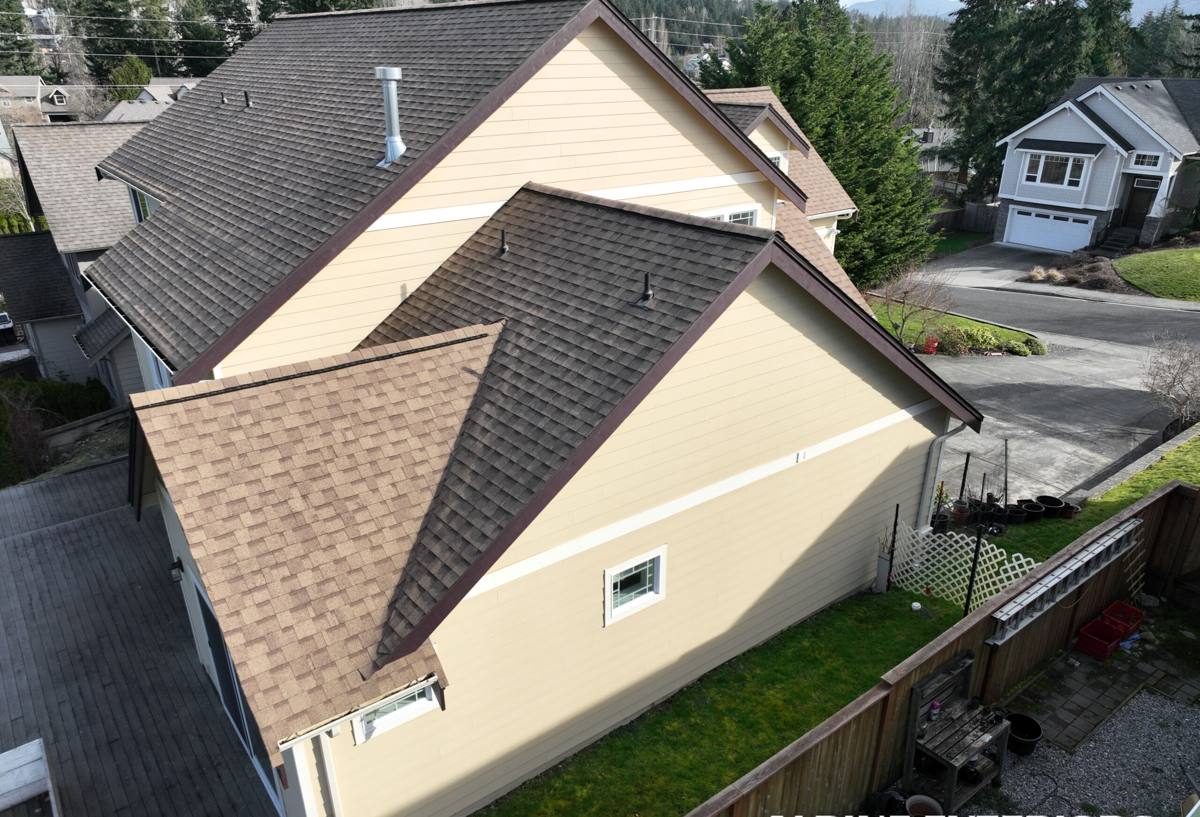
What Makes This Different from Standard Window Replacement
Replacing a window in an existing wall means working with whatever flashing and sheathing details are already there, good or bad. New-construction installation is the opposite situation — you're setting the window into a rough opening with no siding, no trim, and no prior weatherproofing layer to compensate for. That's an advantage if it's done correctly, because every layer of protection can be built in from scratch, lapped and sequenced the way it's supposed to be. It's also less forgiving, because there's no existing barrier to fall back on if a step gets skipped.
For a Sandy Point property, this means the installer needs to think about wind-driven rain intrusion at every seam — not just at the window unit itself, but at the sill pan, the head flashing, and the transition into the surrounding wall assembly. A window that's watertight on a calm day in a showroom can still leak under sideways rain if the sill pan isn't sloped and lapped correctly, or if the housewrap isn't integrated with the flashing tape in the right order.
Salt Air and Metal Components
Proximity to Puget Sound and the Strait of Georgia means salt in the air corrodes unprotected fasteners, cheap flashing metals, and exposed hardware faster than it would inland. On new-construction jobs, that pushes decisions toward corrosion-resistant fastener specs and flashing materials that hold up to chloride exposure over the long run, rather than the cheapest option that happens to pass a first inspection.
Driving Rain and Sill Design
Wind-driven rain doesn't just fall — it gets pushed sideways and upward under trim and behind flanges if there isn't a properly sloped sill pan and back-dam to stop it. This is one of the most common places new-construction window installs fail in wet coastal climates, and it's almost entirely a workmanship issue rather than a product issue.
Moss and Sustained Dampness
Whatcom County's long wet season keeps north-facing walls and shaded window openings damp for extended stretches. That doesn't mean windows themselves grow moss the way a roof does, but sustained moisture at the sill and trim area is exactly the condition that breeds rot and mildew if the assembly beneath the finish surfaces can't drain and dry.
What a Correct New-Construction Window Job Actually Involves
A proper installation follows a sequence, and skipping or reordering steps is where most long-term problems start. At a high level, the work should include:
- Verifying the rough opening is square, plumb, and sized correctly before the window ever arrives on site
- Installing a sloped, back-dammed sill pan with the appropriate flashing membrane, lapped correctly with the housewrap below
- Integrating jamb flashing so water sheds outward and down, never trapped behind the window flange
- Setting the window level, plumb, and square, with shims placed to avoid distorting the frame
- Installing head flashing that laps over the housewrap above the opening, maintaining a continuous drainage plane
- Sealing with the correct sealant at the correct joints — not sealing everything solid, which can trap moisture instead of letting it drain
- Insulating the gap between frame and rough opening without overpacking, which can bow the frame and affect operation
Every one of these steps matters more in a place like Sandy Point than it would in a drier, more sheltered inland location, because the margin for error against wind-driven rain and salt exposure is smaller.
Choosing Windows for This Environment
Frame material, glass package, and hardware all factor into how a window performs here. There's no single "best" window for every home — it depends on budget, architectural style, and how exposed the specific elevation is to wind and rain. What matters most is matching the product to the exposure and making sure the installation detailing matches the manufacturer's requirements for warranty coverage.
| Factor | Coastal Consideration | What to Ask About |
|---|---|---|
| Frame material | Vinyl, fiberglass, and wood-clad all perform differently under UV, salt exposure, and moisture cycling | Expected lifespan in a marine-influenced climate, and warranty terms for coastal locations |
| Glass package | Wind-driven rain and temperature swings favor tighter seals and appropriate low-E coatings | Whether the glass package is rated for the wind and water exposure of the specific elevation |
| Hardware and fasteners | Salt air accelerates corrosion of standard steel hardware | Corrosion-resistant fastener and hardware specifications |
| Flashing system compatibility | Must integrate cleanly with the specific window's flange design | Whether the flashing tape and sill pan system is compatible with the chosen window brand |
| Warranty structure | Some manufacturer warranties require specific installation methods to remain valid | What voids the warranty, and whether installation records are kept |
Cost Factors Homeowners and Builders Should Understand
New-construction window costs vary based on several factors beyond just the unit price of the window itself. Understanding what drives the number helps you compare quotes on an apples-to-apples basis rather than just picking the lowest bid.
| Cost Driver | Why It Matters |
|---|---|
| Number and size of openings | Larger and more numerous openings mean more flashing detail work, not just more glass |
| Elevation exposure | West- and southwest-facing walls that take the brunt of storm wind typically need more attention to flashing detail than sheltered elevations |
| Frame material and glass package | Higher-performance packages cost more upfront but can reduce long-term maintenance and energy costs |
| Site access and building stage | Coordinating with framing, housewrap, and siding schedules affects labor efficiency |
| Custom sizes or shapes | Non-standard openings require custom flashing solutions rather than off-the-shelf components |
As a general rule, it's worth spending a bit more on correct flashing detail and labor time than trying to save money there — the window unit itself is easy to warranty and replace if it fails, but hidden water damage behind the wall is expensive to diagnose and repair.
Our Process on Sandy Point New-Construction Jobs
When we're brought onto a new-construction or addition project in Sandy Point, we start by reviewing the rough openings and the wall assembly plan before any window arrives, so we know the flashing sequence matches both the window manufacturer's instructions and the realities of the site's exposure. We coordinate directly with the framing and siding crews so the housewrap, flashing, and window installation happen in the correct order — this is often where new-construction jobs go wrong, when trades work out of sequence and someone ends up covering an incomplete flashing detail with siding.
On site, we set each window plumb, level, and square, install sill pans and flashing in the sequence that keeps water moving outward and down, and document the work as we go. Once windows are set and flashed, we do a final check before siding closes the wall up, because that's the last point where a flashing mistake can be caught and fixed without tearing anything open.
A Practical Checklist Before You Sign a Contract
- Ask whether the installer follows manufacturer-specific flashing instructions for the window brand you've chosen
- Confirm who is responsible for coordinating the housewrap and flashing sequence with the framing and siding trades
- Ask what happens if a rough opening isn't square or sized correctly on delivery day
- Get clarity on what fastener and flashing materials will be used, given the salt air exposure
- Ask whether photos or documentation of the flashing work will be kept before it's covered by siding
- Confirm the warranty terms for both the window product and the installation labor
Why Local Experience in Sandy Point Specifically Matters
A crew that's worked other Sandy Point homes already understands how exposed a given elevation typically is to wind off the water, how long a wall stays damp during the wet season, and what level of flashing detail actually holds up here versus what merely passes an inspection. That's different knowledge than general new-construction window experience in a drier or more sheltered part of Whatcom County. It shows up in small decisions — how a sill pan is sloped, which sealant is used where, how much overlap is built into the flashing — that don't show up on a spec sheet but make the difference between a window wall that's still dry in ten years and one that starts hiding a rot problem in three.
If you're planning new construction or an addition in Sandy Point and want the window installation done right the first time, we're happy to walk the site, look at the plans, and give you a straightforward, no-pressure estimate — just fill out the form below.