 Blaine Roofing
 Roof Repair Built for Everson's Weather, Not a Generic Checklist
Everson sits inland from the Salish Sea, but that doesn't mean the roofs here get an easy ride. Whatcom County weather still reaches Everson roofs the same way it reaches every roof between Blaine and the foothills: moisture-laden air drifting in off the water, long stretches of driving rain through fall and winter, and a moss season that seems to start earlier every year. A roof repair here isn't just "patch the leak and go." It's a decision about how that roof is going to handle the next wet season, and the one after that.
We work Everson regularly, which matters more than it sounds like it should. A crew that only shows up for one job doesn't have a feel for how this area's roofs actually fail — which valleys clog first, which slopes hold moss longest, which flashing details tend to give out after a decade of freeze-thaw cycles and wind-driven rain. That local pattern recognition is what turns a repair from a guess into a fix that holds.
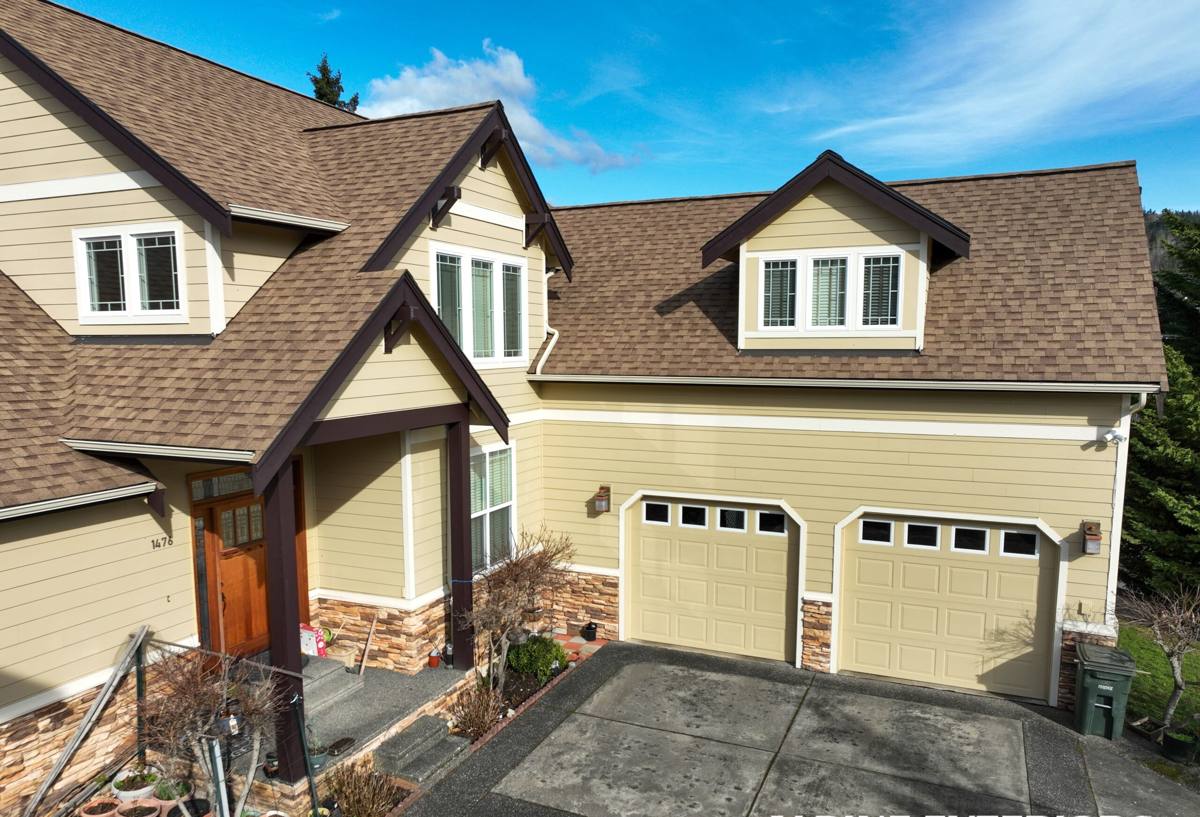
Why Roofs in This Area Fail the Way They Do
Most of the repair calls we run in Everson trace back to a small handful of causes, and almost all of them are weather-driven rather than random bad luck.
Moisture That Never Fully Dries Out
Whatcom County doesn't get brutal winters, but it gets long ones — weeks of overcast, damp air that keeps roof surfaces from ever fully drying between rain events. That constant low-grade moisture is what lets moss and algae get a foothold in the first place, and it's what turns a small gap in flashing into a slow, months-long leak instead of an obvious one.
Moss and Organic Growth
A long moss season isn't just cosmetic. Moss holds water against the roofing surface, works its way under shingle tabs and shakes as it grows, and lifts material away from the deck over time. Left unaddressed, a moss mat can shorten the useful life of a roof by years, and it almost always shows up worst on north-facing slopes and anywhere shade keeps a section of roof from drying out.
Wind-Driven and Salt-Influenced Rain
Rain that comes in sideways off the Salish Sea doesn't behave like a straight-down rain event. It gets pushed up under shingle edges, into exposed nail heads, and along flashing seams that would otherwise shed water fine in calmer conditions. Combine that with the salt-tinged air common across this part of Whatcom County, and you get accelerated corrosion on exposed metal fasteners and flashing well before the roofing material itself is due for replacement.
Flashing and Penetration Failures
Chimneys, vents, skylights, and valleys are where the vast majority of "small" leaks actually start. Flashing is metal, sealant is not permanent, and both move differently than the roofing material around them as temperatures shift. A flashing repair that isn't done correctly the first time tends to come back — often in a different spot on the same roof.
What a Correct Roof Repair Actually Involves
A repair that's done right starts with diagnosis, not assumption. Water rarely enters a roof exactly where it shows up on the ceiling below, so tracing the actual entry point is the first real step — not the patch itself.
- Full inspection of the affected slope, not just the spot where the leak appeared inside
- Check of all flashing points: chimney, skylights, vent pipes, valleys, and wall-to-roof transitions
- Assessment of moss and debris buildup, especially in valleys and along the eaves where water concentrates
- Inspection of the roof deck itself for soft spots or rot where water has been sitting
- Check of fasteners and exposed metal for corrosion, particularly on older roofs
- Confirmation that attic ventilation isn't contributing to condensation that mimics a roof leak
Once we know what's actually happening, the repair itself is matched to the cause — not a one-size patch. A moss-related leak gets treated differently than a flashing failure, and a flashing failure gets treated differently than wind-lifted shingles. Doing this out of order, or skipping the diagnosis step, is the single biggest reason repairs fail to hold past one wet season.
Our Process for Everson Roof Repairs
We keep the process straightforward because homeowners deserve a clear answer, not a sales pitch.
- Inspection and honest assessment. We look at the whole roof, not just the reported problem area, and tell you what we actually find — including if a repair isn't the right call.
- Clear explanation of the cause. You'll know why the leak or damage happened, not just that it did.
- A straightforward scope and price range. No inflated line items, no pressure to upgrade to a full replacement if a repair genuinely solves the problem.
- The repair itself. Done to match how this climate actually treats a roof — proper flashing technique, correct sealant use, and attention to drainage, not just a cosmetic fix.
- A look at what else is coming. If we see moss returning, aging flashing, or a section nearing the end of its life, we'll tell you honestly so you can plan rather than get surprised.
Repair or Replace? A Practical Way to Think About It
Not every leak means a new roof, and not every roof with a few problem spots is worth patching indefinitely. The honest answer depends on the age of the roofing, how widespread the damage is, and how the roof has been maintained.
| Situation | Repair usually makes sense | Replacement usually makes sense |
|---|---|---|
| Age of roofing material | Roof is within its expected service life | Roof is at or past the end of its rated lifespan |
| Extent of damage | Isolated to one flashing point, valley, or section | Multiple slopes showing wear, granule loss, or moss damage |
| Deck condition | Deck is solid under the affected area | Soft spots or rot found in more than one location |
| Maintenance history | Roof has been kept reasonably clear of moss and debris | Long-term moss buildup has already lifted material broadly |
| Underlying cause | A single, identifiable failure point | Systemic issue — ventilation, widespread flashing age, material past prime |
If we're standing on your roof and it's genuinely a repair situation, that's what we'll recommend. If it isn't, we'll explain exactly why before you spend money on something that won't hold.
Seasonal Timing Matters More Than People Expect
In Whatcom County, when a repair happens can matter almost as much as how it's done. Sealants and adhesives need certain temperature and moisture conditions to cure properly, and working on a soaked or moss-covered roof surface makes it harder to get a clean, lasting bond. That's part of why catching problems before the heaviest rain months arrive puts you in a much stronger position than trying to chase a leak mid-storm.
Signs You Shouldn't Wait On
- Visible moss growth on shaded slopes or in valleys
- Granules collecting in gutters or downspouts
- Discoloration or staining on interior ceilings, even faint
- Daylight visible through the attic at roof boards or flashing
- Shingles or shakes that look lifted, curled, or cracked from the ground
- Rust streaks running from metal flashing or fasteners
Any one of these on its own might not be urgent. Two or more together usually means the roof is telling you something before it becomes a ceiling problem.
Why Local Experience Changes the Outcome
A repair crew that works Everson roofs regularly isn't guessing at how this climate behaves — they've already seen how a given roof type, pitch, and orientation holds up against a Whatcom County winter. That translates into faster, more accurate diagnosis, flashing and sealant choices suited to actual local conditions rather than generic best practices, and a realistic sense of what will and won't hold up through the next wet season. It also means we're not learning on your roof — the moss patterns, the wind exposure, the way salt-tinged rain finds the weak points, we've already dealt with those specifics nearby.
What We Won't Do
We don't recommend a full tear-off when a proper repair will genuinely solve the problem, and we don't quietly downgrade materials or skip flashing steps to make a bid look better on paper. Some contractors treat repairs as an easy add-on sale toward a replacement job — our standard is to fix what's actually wrong, tell you what to watch, and let you make the call on timing for anything bigger.
Get a Straight Answer About Your Roof
If you're dealing with a leak, visible moss, or just want an honest look at where your roof stands before the next wet season hits, we're glad to come take a look. The estimate is free, there's no pressure attached to it, and you'll get a clear answer about what your roof actually needs — use the form below to get started.