 Blaine Roofing
 Decks in Custer Take a Different Kind of Beating
Custer sits in that stretch of Whatcom County between Blaine and Ferndale where the land is still mostly open — farmland, tree lines, and homes with room to breathe. It's a few miles inland from the saltwater of Semiahmoo Bay and Drayton Harbor, but "inland" in this part of the county doesn't mean dry. Salt-laden air still moves through on the marine winds, driving rain comes in sideways more often than straight down, and the tree cover that makes Custer properties shady and pleasant in July is the same tree cover that keeps decks damp and shaded for most of the year. That combination — salt exposure, sustained wet weather, and low sun angles for months at a time — is exactly what wears out a deck faster than the same structure would age somewhere drier.
We're not describing a hypothetical. It's the pattern we see repeatedly on decks we're called out to repair in this area: fasteners corroding well before the wood around them fails, moss and algae building up on north-facing boards and stair treads, and moisture finding its way into the one place every deck is most vulnerable — where it attaches to the house.
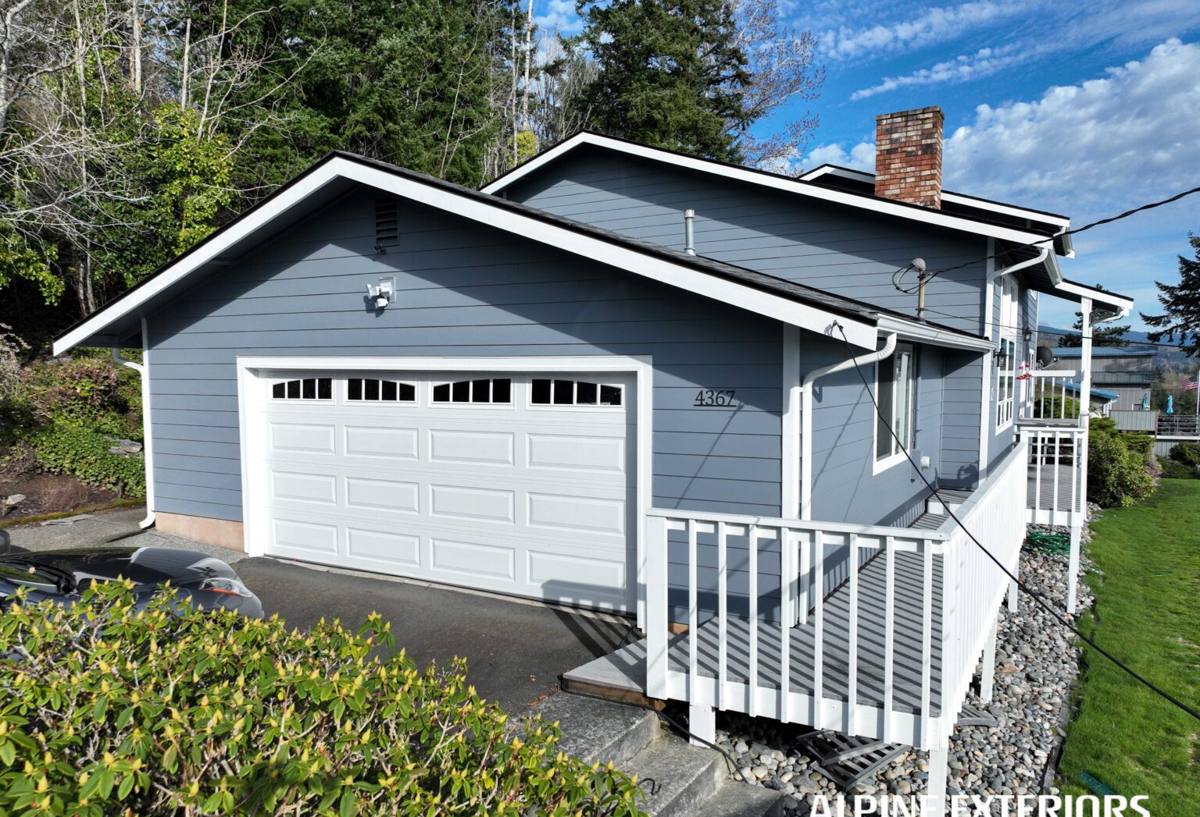
What Actually Wears Out a Deck Here
Salt Air and Fastener Corrosion
Standard carbon-steel screws, nails, and joist hangers don't hold up well this close to salt water. Once the zinc coating on a galvanized fastener breaks down — which happens faster in salt air than most people expect — rust sets in, the fastener loses holding strength, and you get the telltale rust streaks bleeding down the decking boards. A deck can look structurally fine on the surface while the connections underneath are quietly failing.
Driving Rain and Moisture Intrusion
Wind-driven rain doesn't fall straight down, so it gets pushed sideways into gaps, under flashing, and behind ledger boards that weren't detailed correctly in the first place. The ledger board — the piece that bolts the deck to the house — is the single most common point of hidden rot we find, because water gets trapped between the ledger and the siding and just sits there.
Moss, Algae, and Shade
Long, wet winters plus tree-shaded yards mean moss and algae get a real foothold on horizontal surfaces: decking boards, stair treads, and rail caps. Beyond being slippery and unattractive, moss holds moisture against the wood surface far longer than open sun-exposed wood ever would, which accelerates rot in the boards themselves, not just the framing underneath.
Freeze-Thaw and Ground Movement
Whatcom County doesn't get the deep freezes some inland regions do, but Custer still sees enough freeze-thaw cycling in a wet, saturated soil to shift posts and footings over the years, especially on older decks that weren't set on footings deep enough or wide enough for the soil type.
Signs a Custer Deck Needs Repair, Not Just a Wash
- Soft or spongy spots when you walk across the decking, especially near the house
- Rust streaks running down from screw heads or around joist hangers
- Visible gaps, cracking, or separation where the deck meets the house siding
- A railing that flexes or wiggles more than it should when you lean on it
- Persistent green or black growth on boards that doesn't scrub off and comes right back
- Stair stringers that feel bouncy or uneven underfoot
- Visible daylight or gaps between the ledger board and the house wall
- Fastener heads that are rusted, popped up, or missing entirely
Any one of these on its own might be minor. Several together usually mean the deck has been quietly deteriorating for a while and needs a real inspection, not just a pressure wash and a coat of stain.
What a Correct Deck Repair Actually Involves
Inspection Before Anything Else
We start underneath, not on top. That means checking posts, footings, joists, and the ledger connection for soft wood, rust, and movement — probing with a screwdriver or awl in suspect areas rather than just eyeballing the surface. A deck that looks fine from the top can have a compromised ledger board or a rotted joist end that isn't visible until you're underneath it or pulling a board.
The Ledger Connection Gets Special Attention
Because it's the most common failure point in this climate, we pay particular attention to how the ledger board is flashed and sealed against the house. If the original installation didn't include proper flashing to shed water away from the house wall, that gets corrected as part of the repair, not just patched around.
Structural Repairs First, Cosmetic Repairs Second
Rotted joists, posts, or ledger sections get sistered, reinforced, or replaced outright before we touch decking boards or railings. There's no point in putting new boards over framing that's still compromised underneath.
Fasteners and Hardware Matched to the Climate
Given the salt air exposure in this part of the county, we use hot-dip galvanized or stainless steel fasteners and connectors rather than standard coated hardware, particularly at structural connections like joist hangers and ledger bolts. It costs a bit more up front and saves a callback in five years when the original fasteners rust through.
Decking and Railing Repair or Replacement
Individual boards that are soft, cracked, or badly weathered get replaced rather than patched. Railings get evaluated both for structural soundness and for code — a rail that was fine when it was installed twenty years ago may no longer meet current guardrail height and baluster spacing requirements, and repair work is a natural point to bring it up to standard.
Permits When the Work Calls for Them
Straightforward board and railing repairs generally don't require a permit. Structural work — footing replacement, major framing repair, or anything that changes the deck's structural design — may fall under Whatcom County permitting requirements, and we'll tell you plainly if your project crosses that line rather than quietly skip it.
Repair or Replace: How We Make That Call
| Factor | Leans Toward Repair | Leans Toward Replacement |
|---|---|---|
| Framing condition | Isolated soft spots, otherwise sound | Widespread rot in joists, posts, or ledger |
| Age of structure | Under 15-20 years, built to a reasonable standard | Older deck, unknown or undersized footings |
| Fastener condition | Localized corrosion, easily replaced | Systemic rust throughout connections |
| Decking material | A few damaged boards among otherwise good ones | Most boards cupping, splitting, or soft |
| Code compliance | Minor rail adjustments needed | Structure doesn't meet current guardrail or attachment code at all |
Most decks we look at in Custer fall somewhere in the middle — sound framing with a handful of real problems that a targeted repair can fix. We'll tell you honestly when a deck has crossed the line into "replacement makes more sense than another round of patches," because sinking repair money into a structure that's fundamentally past its service life doesn't do you any favors.
Decking Material Choices for This Climate
When boards need replacing, the material choice matters more here than in a drier climate. Pressure-treated lumber is affordable and structurally solid but needs regular sealing to handle the wet season without cupping or splitting. Cedar has a natural resistance to rot and looks good, but it's a softer wood that shows wear from moss and moisture faster if it isn't maintained. Composite decking costs more up front but shrugs off moisture and moss far better than either wood option, which matters on a shaded, damp lot. There's no universally "right" answer — it depends on your budget, how much upkeep you want to do, and how much sun versus shade your particular deck sees.
A Simple Maintenance Routine That Actually Extends the Life of a Repair
- Sweep debris and standing leaves off the deck surface before the wet season sets in
- Rinse off moss and algae buildup at least once a year, more often on shaded sections
- Check the ledger board area annually for gaps, staining, or soft wood
- Reseal or re-stain wood decking on the manufacturer's recommended schedule, not just when it looks faded
- Tighten or replace any fasteners showing early rust before they fail completely
- Keep gutters and downspouts clear so runoff isn't dumping extra water onto or near the deck
None of this replaces a proper repair when the structure needs one, but it's the difference between a repair that lasts fifteen years and one that starts showing the same problems in five.
Why a Crew That Already Works Custer Makes a Difference
Deck repair isn't a one-size-fits-all trade. A contractor who mostly works drier inland areas may not think twice about standard coated fasteners or skip the extra flashing detail at the ledger, because in their climate it's rarely the problem. Out here, those shortcuts show up as rust streaks and soft ledger boards within a handful of years. We work this specific stretch of Whatcom County regularly, so we're not guessing at what the salt air, the rain patterns, and the long moss season do to a deck over time — we're building and repairing to account for it from the start. That local familiarity also means straightforward scheduling and a crew that isn't driving in from across the region just for your job.
Getting an Honest Look at Your Deck
If your deck in Custer is showing soft spots, rust stains, moss buildup, or a railing that doesn't feel as solid as it used to, it's worth getting an inspection before those problems get worse or more expensive to fix. We offer free, no-pressure estimates — we'll tell you plainly what's wrong, what it'll take to fix it right, and whether repair or replacement makes more sense for your situation. Fill out the form below to get started.