 Blaine Roofing
 Storm Damage Roofing in Cherry Point: A Different Kind of Wear
Cherry Point sits right on the water in northern Whatcom County, and that location shapes what happens to a roof here. Homes and outbuildings in this area take a steady mix of wind off the Strait of Georgia, driving rain that comes in sideways more often than straight down, and salt-laden air that settles on every exposed surface. None of that shows up on a roof as one dramatic event most of the time. It shows up as accelerated wear that catches homeowners off guard when a storm finally finds the weak spot.
A single windstorm rarely creates damage out of nothing. It usually finds fasteners that had already started backing out, shingle tabs that had already gone brittle from UV and salt exposure, or flashing that had already lost its seal. Storm damage repair in Cherry Point isn't just about patching what broke during the last blow — it's about understanding why that spot failed first, so the same storm two years from now doesn't reopen it.
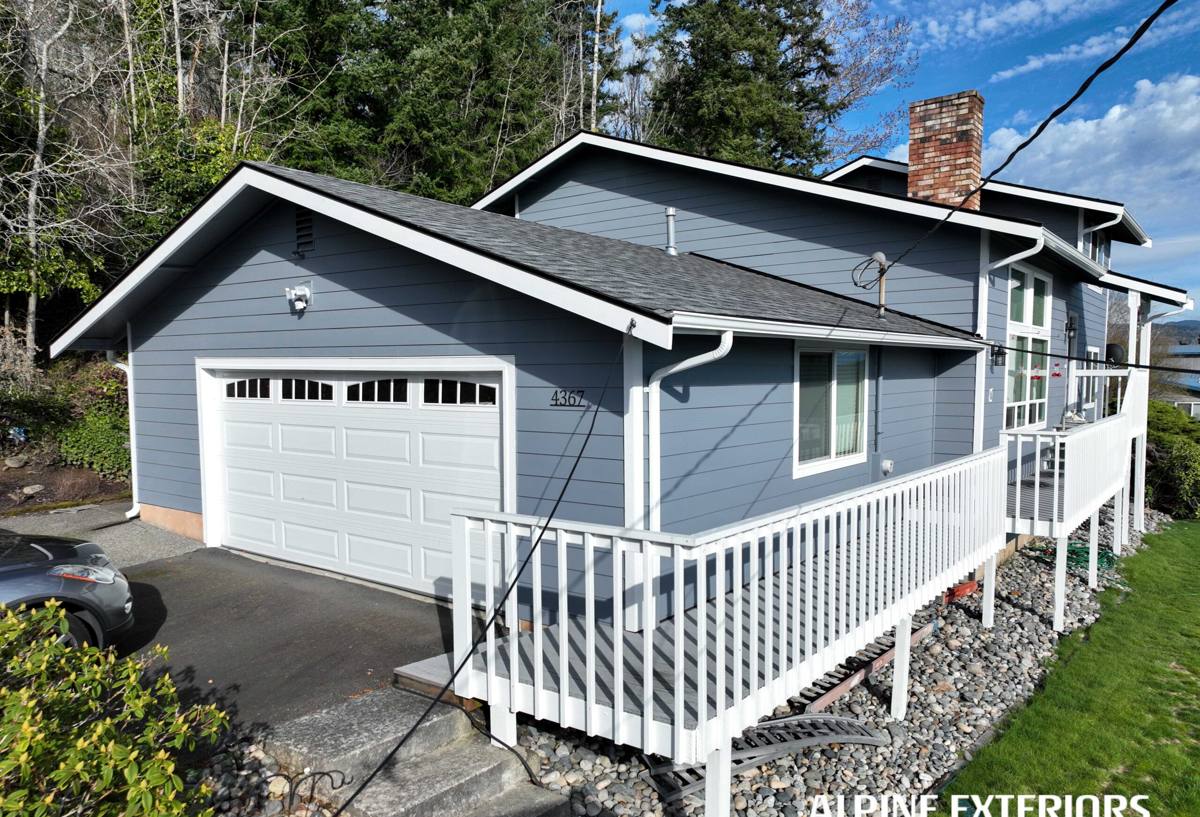
What Whatcom County Storms Do to a Roof
Wind and Driving Rain
Cherry Point's exposure to open water means wind gusts arrive with less to slow them down than they'd meet further inland. That wind doesn't just lift shingles at the ridge and edges where uplift forces are strongest — it drives rain sideways under laps and flashing that were never designed to handle water moving horizontally. A roof that sheds a straight-down rain just fine can still leak during a wind-driven storm if the underlayment and flashing details weren't built with that in mind.
Salt Air
Salt in the air accelerates corrosion on any exposed metal — nail heads, flashing, vent stacks, and gutter hardware all age faster this close to the water than they would a few miles inland. Corroded fasteners lose their grip on shingles and metal panels, and corroded flashing seams open up gaps that let water in even without a dramatic storm event.
Moss Season
Whatcom County's long, damp stretch of the year gives moss and algae plenty of time to establish themselves, especially on north-facing slopes and shaded sections of roof. Moss holds moisture against the roof surface long after the rest of the roof has dried out, and it works its way under shingle edges, lifting them slightly. A lifted shingle edge is exactly the kind of small gap that wind-driven rain and storm gusts exploit.
Signs Your Roof Took Storm Damage
Not all storm damage announces itself with an obvious leak. Some of it is quiet until it isn't. Worth checking after any significant wind or rain event:
- Shingles that look curled, cracked, or are missing outright, especially along ridges, hips, and roof edges
- Granules collecting in gutters or at downspout outlets — a sign of shingle surface wear from wind abrasion
- Soft spots or discoloration on ceilings, particularly near chimneys, skylights, or exterior walls
- Flashing that looks bent, lifted, or separated from the roof surface around any penetration
- Gutters pulling away from the fascia or showing dents from wind-blown debris
- A musty smell in the attic, which often shows up before any visible ceiling stain does
Any one of these is worth a look. Several at once usually means water has already found a way in, even if it hasn't reached the inside of the house yet.
What a Correct Storm Damage Repair Actually Involves
A rushed storm repair fixes what's visible and leaves the underlying cause in place. A correct one works through the whole system:
Full Inspection Before Any Repair
We check the whole roof, not just the area where damage was reported. Wind and water don't confine themselves to one spot, and a storm strong enough to tear off shingles in one area has often stressed fasteners and flashing elsewhere too.
Underlayment and Decking Check
If water has gotten past the shingles, the underlayment and the roof deck underneath need to be checked for saturation or soft spots. Replacing shingles over compromised decking is a short-term fix that fails again the next time it rains hard.
Flashing Done Right
Flashing around chimneys, vents, skylights, and roof-to-wall transitions is where storm leaks most often originate. Repairs here need to restore a proper water-shedding lap, not just seal a gap with caulk, which degrades faster than it looks like it will, especially in this air.
Fastener and Material Match
Given the corrosion pressure from salt air, we use fasteners and flashing rated for coastal exposure where the original materials weren't up to it. Matching cheaper hardware back into a coastal roof just resets the clock on the same failure.
Our Storm Damage Repair Process
- Assessment: We walk the roof and the attic, document what we find, and explain what's storm-related versus pre-existing wear.
- Written scope: You get a clear description of what needs repair, what materials we'll use, and why — no vague line items.
- Temporary protection: If there's active exposure, we get the roof weathertight first, even if full repair takes a few extra days to schedule materials.
- Repair: Shingles, flashing, decking, and fasteners are addressed together so the fix holds under the next storm, not just until the next dry spell ends.
- Final check: We walk the completed work with you and point out anything we think is worth watching going forward.
Repair or Replace? What Actually Drives the Decision
Storm damage doesn't always mean a full roof needs replacing, but sometimes it's the event that reveals a roof was already near the end of its useful life. Here's how we think through it:
| Factor | Leans Toward Repair | Leans Toward Replacement |
|---|---|---|
| Roof age | Under 12-15 years, otherwise sound | Nearing or past typical material lifespan |
| Extent of damage | Localized to one section or penetration | Spread across multiple slopes |
| Decking condition | Dry, solid underneath | Soft, delaminated, or repeatedly wet |
| Shingle condition elsewhere | Still flexible, granules intact | Widespread curling, brittleness, granule loss |
| History of repeat leaks | First occurrence in that area | Same spot has leaked more than once before |
We'll give you an honest read on where your roof falls on this list rather than defaulting to whichever recommendation is more profitable for us. A lot of storm-damage calls in Cherry Point are legitimately repairable; some aren't, and we'll tell you which is which.
Why a Crew That Already Works Cherry Point Matters
Storm damage repair done by someone unfamiliar with this stretch of coastline tends to treat it like any other repair — patch the visible damage, use standard materials, move on. That approach holds up fine inland. Here, it often means a callback within a year or two once salt air and the next windstorm find the same weak point again.
Working Cherry Point and the surrounding Blaine area regularly means we know which roof details fail first in this exposure, which fastener and flashing choices actually hold up to salt air, and how the moss season timeline affects when repairs should happen versus when they can wait. That's not something a crew passing through for a single job picks up on the first visit.
It also means faster response when a storm actually causes damage. We're not driving in from across the county to get eyes on a roof that needs a tarp today, not next week.
Reducing Storm Damage Before the Next One Hits
Some of the best storm-damage prevention happens outside of storm season. A few things worth staying on top of if you're in Cherry Point:
- Clear moss buildup before it lifts shingle edges — earlier in moss season is easier and cheaper than after it's established
- Keep gutters and downspouts clear so wind-driven rain has somewhere to go instead of backing up under roof edges
- Have flashing around chimneys and vents checked periodically, since these are the first places salt-air corrosion shows up
- Trim back branches that could come down on the roof during high wind, a common source of impact damage in coastal windstorms
- After any significant storm, do a visual check from the ground for missing or lifted shingles rather than waiting for a leak to show up inside
Get an Honest Look at Your Roof
If a recent storm has you wondering whether your roof came through it okay, or you've noticed signs that something's not sealed the way it should be, we're glad to come out and take a look. We'll give you a straight answer about what we find, what it'll take to fix it, and what you can reasonably let wait. Reach out for a free, no-pressure estimate using the form below.