 Blaine Roofing
 Blaine Harbor Puts a Roof Through More Than Most Homes Ever See
Houses in Blaine Harbor sit close enough to the water that the air itself works against a roof, day in and day out. Salt-laden air off the Salish Sea corrodes exposed metal fasteners and flashing faster than it would a few miles inland. Add Whatcom County's driving rain, where wind pushes water sideways under laps and around penetrations instead of letting it run straight off, and you have a climate that punishes anything installed with shortcuts. Then there's the long moss season that stretches through most of the wet months here, when shaded, north-facing slopes stay damp long enough for moss and algae to take hold and start lifting shingle edges from underneath.
None of this means a roof in Blaine Harbor is doomed to fail early. It means the installation has to account for these three stressors specifically, rather than following a generic spec sheet written for a drier region. A roof designed and installed with salt exposure, wind-driven rain, and moss growth in mind will simply outlast one that wasn't.
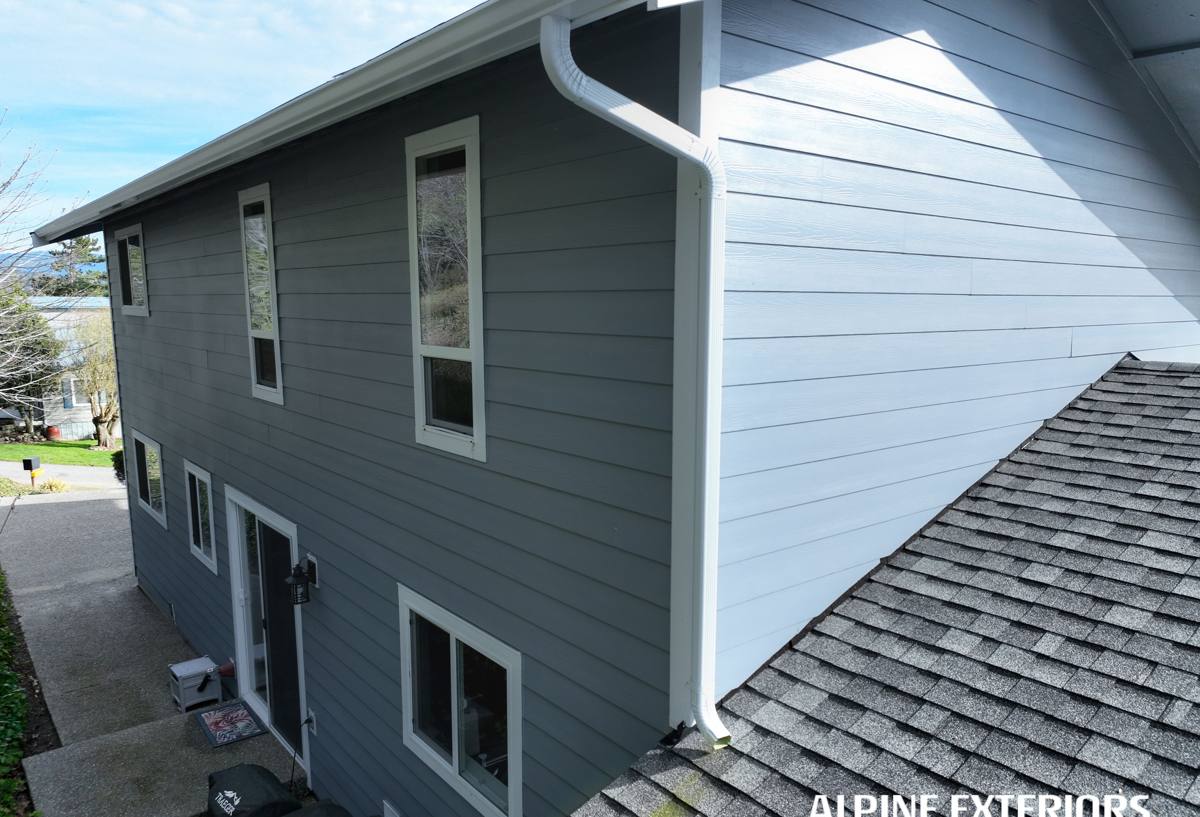
What "Correct" Actually Means for a New Roof Installation
A new roof is a system, not a single product. The shingles or panels on top get the attention, but the layers underneath and the details around edges and penetrations are what actually determine whether the roof performs in this climate. A correct installation includes:
Full Tear-Off and Deck Inspection
We remove the old roofing down to the deck rather than layering over it. This lets us inspect the sheathing for soft spots, rot, or delamination caused by long-term moisture intrusion — a common issue on homes near the harbor where trapped humidity under old, undervented roofs has had years to do damage. Any compromised decking gets replaced before anything new goes down; installing over a weak deck just hides a structural problem under a new warranty.
Underlayment Built for Driving Rain
Standard felt underlayment is designed to shed water moving straight down a slope. Wind-driven rain off the water can push moisture sideways and under shingle laps, so we use synthetic underlayment with self-sealing ice-and-water shield membrane at eaves, valleys, and around every penetration — the spots where wind-blown water actually gets in.
Flashing at Every Transition
Chimneys, skylights, sidewalls, and roof-to-wall transitions are where most leaks start, not in the open field of shingles. New step flashing, counter-flashing, and kick-out flashing at these points, properly integrated with the underlayment (not just caulked over old metal), is non-negotiable on a correct install.
Ventilation Matched to the Attic
Balanced intake at the eaves and exhaust at the ridge keeps attic humidity and temperature in check. In a marine climate, poor ventilation traps moisture that condenses on the underside of the deck, which shortens the life of the roof from the inside out and feeds the conditions moss and mold need to establish themselves.
Material Options for a Salt-Air, High-Moss Climate
There isn't one "best" roofing material for Blaine Harbor — the right choice depends on the home's roof pitch, budget, and how much shade the roof gets. Here's how the common options actually compare under these specific conditions:
| Material | Salt Air Resistance | Moss Resistance | Typical Lifespan Here |
|---|---|---|---|
| Architectural asphalt shingle (algae-resistant) | Good, with corrosion-resistant fasteners and flashing | Good — copper or zinc granule strips help on shaded slopes | 25-30 years |
| Standard 3-tab shingle | Fair — more prone to granule loss near salt air over time | Fair — no built-in algae resistance | 15-20 years |
| Standing seam metal | Very good with marine-grade coatings and stainless fasteners | Very good — smooth surface sheds moss more easily | 40-50+ years |
| Cedar shake | Fair — requires more upkeep near salt air | Poor without regular treatment; holds moisture | 20-25 years with maintenance |
For most Blaine Harbor homes, we steer clients toward algae-resistant architectural shingles or standing seam metal, because both hold up to the combination of salt exposure and shaded, moss-prone roof sections without demanding constant upkeep. Cedar shake can look great, but it's a higher-maintenance choice in a climate this wet, and we say so plainly rather than talk anyone into a product that will need more attention than they signed up for.
How We Handle a New Roof Installation, Step by Step
- On-site assessment: We walk the roof and attic, checking deck condition, ventilation, flashing points, and slope exposure to wind and shade.
- Material and scope discussion: We go over material options, cost factors, and timeline honestly, including trade-offs, before any contract is signed.
- Tear-off: Full removal of old roofing and disposal, with the deck inspected as it's exposed.
- Deck repair: Any rotted or delaminated sheathing is replaced, not patched over.
- Underlayment and ice-and-water shield: Installed at eaves, valleys, and penetrations first, then across the full deck.
- Flashing: New flashing at every wall, chimney, skylight, and vent transition.
- Roofing material installation: Shingles or panels installed to manufacturer spec, with fastening patterns adjusted for wind exposure this close to the water.
- Ventilation check and correction: Intake and exhaust balanced for the attic's actual size and existing venting.
- Final walkthrough: We review the finished roof with the homeowner and go over warranty paperwork and basic maintenance.
Moss Season: Prevention Built Into the Install, Not Bolted On After
Moss doesn't cause most of the damage people assume it does by itself — the real problem is what it holds against the roof. Moss retains moisture against the shingle surface for months during the wet season, and on north-facing or heavily shaded slopes common in Blaine Harbor, that moisture never fully dries out between rains. Over time it lifts shingle tabs and works its way under the surface layer.
Rather than relying on a homeowner to scrub moss off every year, we address it at installation with algae-resistant shingle products where the roof design calls for it, and with zinc or copper strip options near the ridge on slopes with heavy shade history. These let rainwater carry trace metal ions down the roof surface, which discourages regrowth without any chemical treatment or annual maintenance contract.
Signs an Existing Roof Needs Replacement, Not Another Repair
- Granule loss heavy enough to see bald patches or granules collecting in gutters
- Shingles curling, cupping, or cracking across multiple sections of the roof
- Soft spots underfoot or visible sagging when viewed from the ground
- Daylight visible through the roof deck from inside the attic
- Repeated leaks in different spots after prior repairs
- Moss or algae staining that returns within a season of cleaning
- Roof age at or past 20-25 years for asphalt shingle in this climate
If a roof is only showing one or two of these signs in a limited area, a repair may still make sense. Once several of these show up together, a full replacement is usually the more cost-effective path — patchwork repairs on an aging roof tend to cost more over a few years than one properly done installation.
Why a Crew That Already Works Blaine Harbor Matters
Roofing crews unfamiliar with this stretch of Whatcom County sometimes install roofs to a generic regional spec that doesn't account for the extra corrosion protection or underlayment coverage this specific shoreline exposure calls for. A crew that regularly works Blaine Harbor knows which slopes on which streets tend to hold shade and moisture longest, understands how far wind-driven rain travels up under an eave in a coastal storm, and specs fastener and flashing materials accordingly rather than defaulting to standard-grade hardware that corrodes faster near the water.
Local familiarity also means realistic scheduling. Roofing work in this area needs to work around the wetter months rather than fight through them, and a crew that knows the local weather pattern plans tear-offs and dry-in timing to avoid leaving a deck exposed when rain is likely.
Cost Factors to Understand Before You Get Quotes
Every roof is priced differently based on size, pitch, and material, but a few factors specific to this area affect cost more than people expect:
| Cost Factor | Why It Matters Here |
|---|---|
| Deck condition | Homes with older, undervented roofs near the water often need more deck replacement than expected once the old roofing comes off |
| Corrosion-resistant fasteners and flashing | Upgrading from standard to marine-grade hardware adds cost but avoids early failure from salt exposure |
| Roof pitch and access | Steeper roofs and harder access add labor time and safety equipment needs |
| Ventilation upgrades | Correcting an undervented attic during the reroof avoids a costly separate project later |
| Material choice | Algae-resistant shingles and metal roofing cost more upfront but reduce moss-related maintenance and last longer |
We break these out clearly in any estimate so a homeowner can see exactly what's driving the number, rather than getting a single lump-sum figure with no explanation.
What to Expect After Installation
A properly installed roof in this climate still benefits from occasional attention. We recommend a visual check after major storms, keeping gutters clear so water doesn't back up under the eave edge, and a look at shaded slopes every year or two for early moss regrowth. None of this is heavy maintenance — it's the kind of five-minute check that catches a small issue before it becomes a repair call. We go over this with every homeowner at the final walkthrough so there are no surprises about what upkeep, if any, is expected.
If your roof in Blaine Harbor is showing its age or you're planning ahead rather than waiting for a leak, we're glad to take a look and walk you through what a correct installation would involve for your specific roof. The estimate is free, there's no pressure, and you'll get a straight answer about whether you need a full replacement or just a repair.